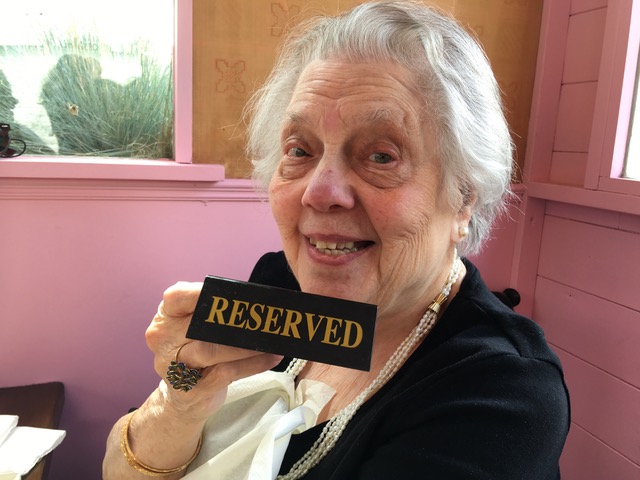
My mum, Esther Silas, died on 16 January 2023 at 01.43 am. When the call came from her carer, we drove across London as fast as the 20mph speed limit would allow. I didn’t care about points on my driver’s license or a speeding fine. But I heard mum’s voice in my ear…respect the law, I am dead, you can do nothing more.
I decided to share this 3+ minute film of mum, with her permission before she died, as she wanted the law to change. I have a habit of vocalising punctuation when I record messages, which you will hear if you watch the video.
Today the UK parliament will vote on an assisted dying bill, whether to continue with the various stages the papers must go through, or whether it will be voted down again. I am in favour of a highly regulated law for those like my mum who are surviving, not living. For those in extreme pain with a few months to live, who are suffering as no one should. Mum had no quality of life, at the end she could not even use a straw or a spoon to keep hydrated. She repeatedly asked me over many months, asked her carer, her GP, her palliative care nurse and other members of the family to give her “one small pill” to end her life.
I had to endure this experience, watch my mother’s lingering death for longer than I anticipated, but worse she had to live it. The memory stays with me. My dad’s death from cancer was horrific and painful with hallucinations and other bodily breakdowns. His palliative care (morphine) was late in coming, his NHS carers were kind, looked after him well and he was in safe hands. I watched his decline, his pain, his body swelling and falling apart in front of us. My sister died in hospital at the age of 53, with a morphine pump easing her journey to death. Her’s was the least brutal of the three deaths. I am not 100% sure my three family members were in pain, but I hope they were not. No one should have to experience a painful death when a beautiful death, a calm death, a chosen death is available with family members alongside their beloved. My mum once tried to kill herself by stuffing her mouth with tissues and holding her nose. She was begging to end her life for months.
I understand for some it is a difficult choice, but currently there is no choice for the terminally ill. If this bill goes through, you still have the choice to choose not to do anything for yourself or your loved ones. My mum had no choice to die in a peaceful way, she endured agony, suffering and was deeply angry.
Where were you when a policeman murdered Sarah Everard?
Where were you when Prince Andrew was named alongside Jeffrey Epstein?
Where were you when Huw Edwards admitted guilt?
Where were you when army officers continued their racist words and actions towards soldier Kerry-Ann-Knight?
Where were you when news broke about Jimmy Savile and Max Clifford and Fred and Rosemary West, and Paul Mosley, Mick Philpott and Mairead Philpott who started a house fire that killed 6 children, and where were you when Sian Hedges, and Jack Benham were sentenced for killing Alfie Phillips?
Where were you when a 14 year old boy was killed in a sword attack in Hainault in April?
Where were you when Carol, Hannah and Louise Hunt were murdered?
Where were you when countless women and children were murdered?
You were waiting for the right opportunity to show your hatred towards a community who have contributed to this country and all our lives and done nothing wrong. You listen and watch incorrect and misleading news on social media. You listen to right wing agitators who do not care any more about you than they do about the three children who were killed.
Do not use the brutal murder of the children in Southport as your excuse to create vicious, cruel attacks that have left many traumatised, their homes, work places, libraries and cars burnt, their lives shattered. Go and do something useful with your angry selves. Show support, not racist slurs. Offer help, not hate. And if you are incapable of doing what any decent human being would do, leave the rest of us in peace, because that is what the majority want to do, live in peace, side by side.
During the pandemic I knew I wanted more from my life but I didn’t know what it was or how to find it. My entire existence came into question. Retiring has never been an option or a desire. It wasn’t that I intended to stop writing or teaching, and my running, swimming and yoga practice are important to my wellbeing, but I hungered after something else, something to stretch me still further.
My wife was midway through a doctorate in existential psychotherapy and I had (wrongly) assumed that I would find philosophy boring and impenetrable. She suggested I look at the coaching MA. I was adamant, I definitely did not want to study or write essays. However, philosophy, the material and the existential approach gave me a new enthusiasm. It was time to expand and develop my intellectual and emotional self, and the training felt entirely right for this stage in my life.
After an introductory workshop at the New School of Psychotherapy and Counselling (affiliated to Middlesex University), I nervously signed up for the MA. To say the course has changed my view on just about everything would not do it justice. In brief, existential coaching works with the client to find a way to realise the changes you want to make, with philosophy at its foundation. It is a non-directive approach (I won’t tell you what to do), and looks at your choices, past, present and future, and the responsibility that comes with those choices.
As I embark on my final year of training, I have several available spaces to offer alongside my current client list. My website will tell you more about how I work, who I am, and how to contact me.
In March 2020, along with thousands of others, we went into lockdown. In March 2020, I had a crisis. What was I going to do with the rest of my life? A close friend had died a month earlier, and I wasn’t to know that in four and a half months another close friend, part of the same circle, was to die and 18 months later his husband would die. Death brings sadness and grief but also perspective. However long I had left, I wanted to make the most of my time.
My wife qualified as a yoga teacher during lockdown, while working, and studying for a PhD in Existential Psychotherapy. Our conversations were ones I had convinced myself I would not a) like, b) comprehend. Existentialism meant philosophy. No way. I’m a secondary modern school girl with few O-levels, a Drama Dip came in my early 20s and two degrees in my mid 30s. But existentialism? Sartre? Heidegger? De Beauvoir? Kierkegaard? My wife’s overwhelming passion for her course had ignited something in me, only I didn’t know it at the time; the flame was building. When she suggested I look at her university’s website, in case there was an introductory workshop I might find interesting, I immediately said NO. My moody inner child emerged. I wasn’t interested in anything, that was the problem. And I was adamant that I did not want to spend another however many years writing essays and studying a subject that had no appeal.
I acquiesced and signed up for a three-hour introductory workshop in Existential Coaching, to prove that I had tried. I would not get on with philosophy, but I was prepared to give it a go and then walk away, confirming that I was right.
I was wrong.
At the end of three hours I was overwhelmed and enthused. It made sense, well, some of it didn’t, but the workshop could have been tailor made for me, for everything I was experiencing right at that moment. My head was buzzing. I could be a coach, I could do that, but two years of study and essays AND a dissertation? I’d done it before, 26 years ago, I was a different person then. But what if I was rubbish, unable to make sense of the material? During my B.A. I was hopeless in tutorials, shy, sitting quietly, lacking confidence. What if I was that same woman? I’d do it. I wouldn’t. I would. I’d sign up. No, definitely not. Yes. No. YES. YES. YES.
I’m not that same woman. I am not shy or quiet and mostly not lacking confidence. If I make a mistake, misunderstand, so what? I find my way with others. We journey together. If I take a detour someone is there to hand me a map and I do the same for them. There is no competition, no rivalry. My life has been transformed. I even enjoy the essays. I feel like I have discovered reading for the first time, the joy, the thrill, the surprises. What could be more stimulating than studying with curious others in Iraq, Japan, India, Israel, Denmark, America, Australia and Essex. In July I will have finished my first year. I can’t quite believe it. Two years ago I had no idea where I would be. I’m still teaching, and writing, but I have taken a detour to focus on my MA because I will probably never have this time again. But what time I have, I am seizing and running with it.
If you’d like to work with me on your detour, here’s my website.
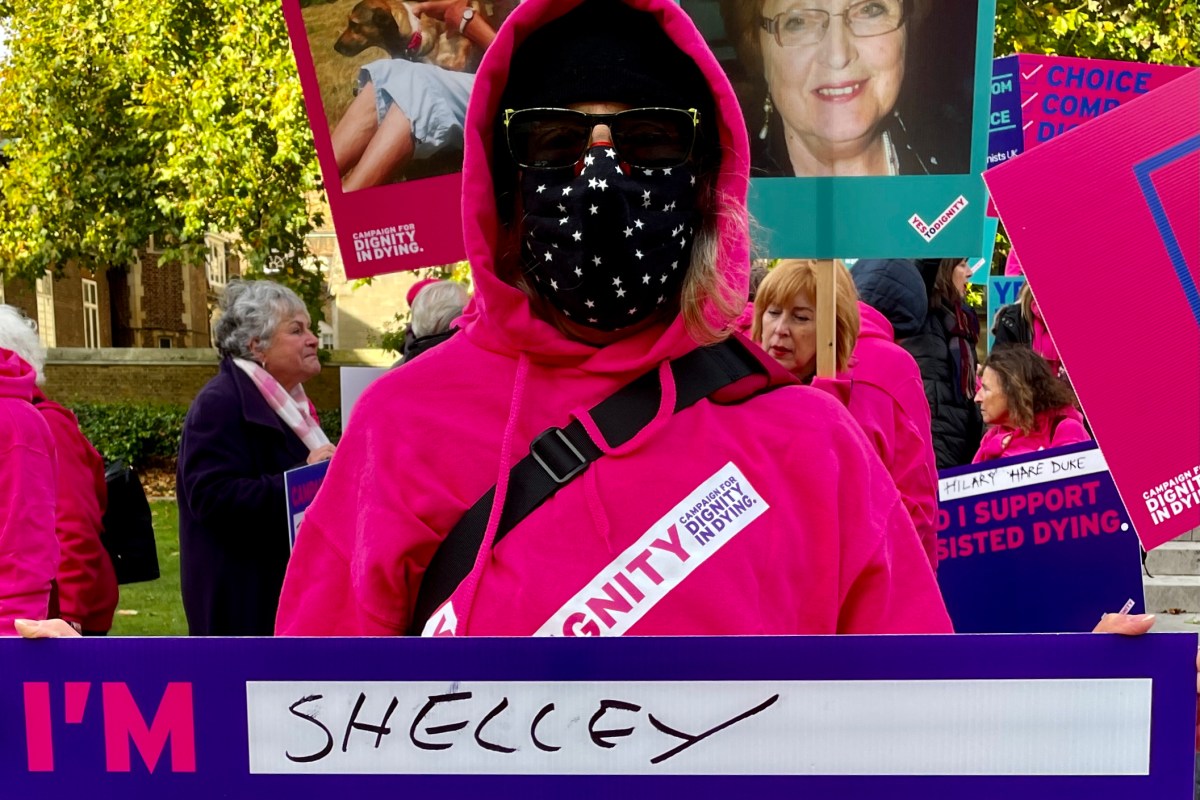
I went to a rally outside Parliament this morning along with many others, all campaigning in favour of the Assisted Dying Bill being read in Parliament today. Older, younger, the sick, those walking with frames, balancing on the cold ground beside those who were grieving, those who were remembering. Everyone had a story about someone’s journey towards dying in the most unbearable circumstances. Everyone has a story. There are over 145 speakers in the House of Lords, the debate will go on for hours.
It’s a contentious subject, not least because those who are disabled are concerned, and rightly so, about their rights, about being killed when they are happy to live. Their lives are as valuable as any life. Today’s bill, if passed, will be for the terminally ill. Those who are suffering and who, as my mother says are in a living hell, will not be considered.
I went to the rally for my mum and for the many others who have and are suffering. I cried as I approached the meeting point, unable to believe that I was here, for my mum, who has asked me to campaign for assisted dying. As many of you know, my mum Esther, at 93, has no quality of life. She cannot see, walk, can hardly talk, she has no enjoyment whatsoever. She has no joy. She wants to die. She is ready to die. She asks me daily to kill her, to slip her an arsenic pill, to end her life, please, please end my life. She is still eating, but she has stopped taking her medication. It is her choice. She cries, she hits herself, clutches at her throat, as if willing her vocal chords to work better. She is suffering, she is overwhelmingly distressed, and so am I.
As one of the speakers said this morning, this is not about quantity of life but quality. Dr Henry Marsh, author of Do No Harm, spoke eloquently and passionately to the group. Baroness Ruth Davidson, standing in front of the statue of George V, supported us. The Rt Honourable David Lipsey acknowledged us all on his way into the Lords and said he would vote in favour of the bill. It was a calm, well organised and highly significant rally with banners held high, names and faces of those dead and those who want to die with dignity, staring across at scaffolding clad Parliament, hoping for a positive outcome.
There were a few Vicars present who spoke for the Bill all agreeing that no one should have to suffer. I was approached by a Christian man who had come to see what was going on. I told him he could choose to think differently to what his religion tells him to believe. He chooses to disagree. I said that my mother’s Orthodox Jewish neighbour admitted she was confused and in conflict about her religious beliefs pitted against my mother’s suffering. It had made her query assisted suicide for the first time. The Christian and I had a civilised discussion, despite the police standing by. We agreed to disagree, he blessed me and we left it at that. As cars tooted their horns in solidarity and bike bells rang out, I chatted to several people; these are some of the stories I heard.
A father who had cancer in his spine and was in unbearable pain, drove his car to a secluded place and died of carbon monoxide poisoning. He died alone.
The father with Motor Neurone Disease who possibly had a couple more years to live, but wanted to end his life when he chose, travelled to Dignitas with his wife and children. He was 59.
A couple held a banner for a friend who they took to Dignitas two years ago. The woman cried as she recounted the story. The man was blind and appeared to be unwell himself.
The retired doctor who has a bottle of chloroform and a plastic bag ready.
If the bill is passed we must ensure that those who are disabled or mentally unwell receive proper care. We must ensure that better support is provided for those who need it. Strict regulations must be in place.
In an ideal word I would like to die peacefully without pain, without illness with my wife by my side. I know the chance of this perfect death is unlikely. Having watched my sister, father and several close friends die horrifically, I believe everyone has the right to choose to die with dignity, without suffering, with their loved ones by their side, neither in a car nor a clinical room. That is why I went to Parliament today.
I am constantly astonished at the lack of diversity on TV and in the theatre. It’s not unusual for me to shout at the screen, or highlight in florescent pink, the mostly white writers and male writers attached to TV series. British TV at least. America, in this respect, does it better. I crave change for those who are not represented, for those who are not given a voice. Yes, things have improved, but they are still not good enough. We can scream all we like, but if those who make the decisions do not try harder, what real hope is there for diversity to flourish?
Lockdown has put creatives – actors and writers and many other artistic contributors – on an even keel because we are all waiting, we are all in limbo. There are a few writers and actors who have been working, most notably on lockdown stories in radio and TV while theatre holds its breath. When it re-emerges, I can almost guarantee that the big boys will be fine. They always have been. It’s their relatives I worry about. Some of them have already packed their bags.
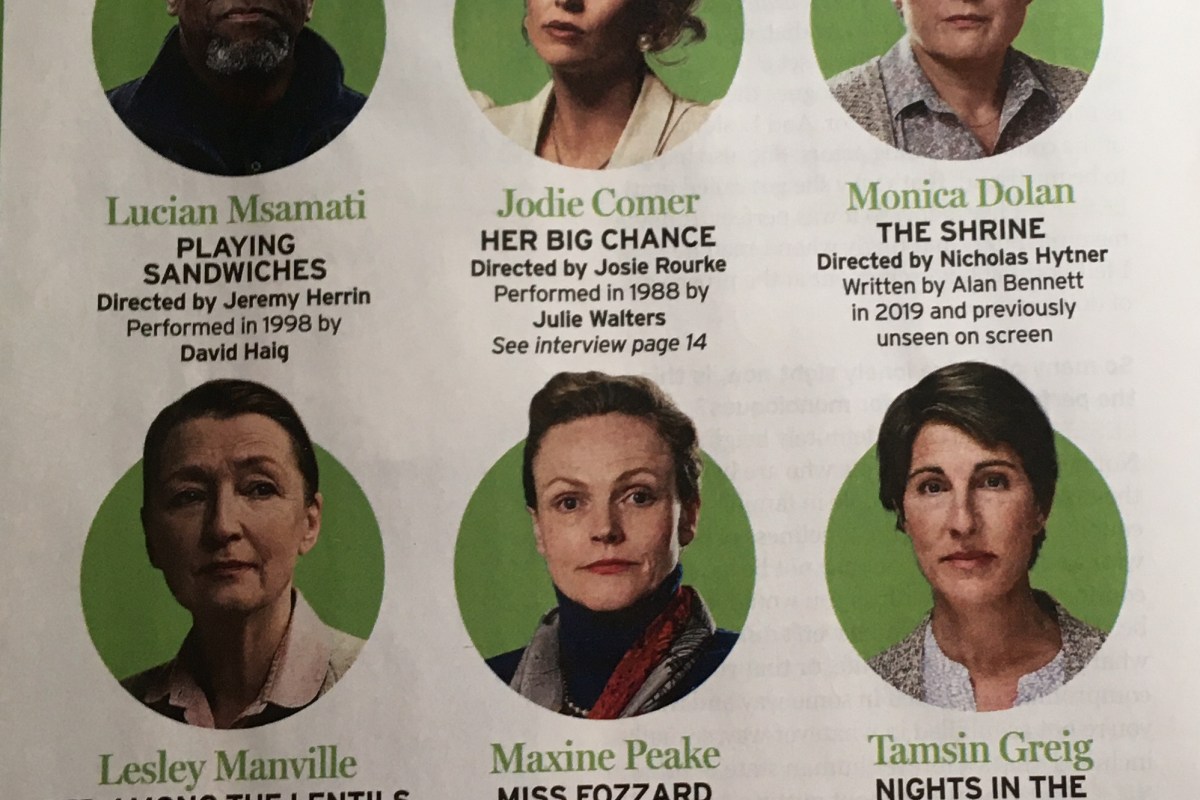
With #BlackLivesMatter rightly dominating our lives over the past few weeks, I opened the Radio Times today (22-26 June edition), curious to see who would be in Alan Bennett’s updated Talking Heads series. Look at this photo. Read the credits. What do you see? Who do you see? I know what I see. I know who I see.
I am astonished, angry and bewildered that the directors and broadcasters could not have worked harder to find a more diverse cast, perhaps have thought to cast a disabled actor. Ten out of twelve of these actors are white. Of the seven directors, three women direct one episode each and one of those women is Asian. The rest are all white, four of the directors, direct more than one episode each. So much for change. So much for trying harder. So much for equality. (And no one gets a medal for noting that ten out of the twelve actors are women.) If we don’t encourage and support the underrepresented, who will? It won’t be those in charge because they haven’t done it yet.
During lockdown, I have listened to several famous actors, talking of their worry of emerging actors, those who have recently left drama school, those who are starting out, all now faced with uncertainty and lack of funds with no end in sight to when their careers might edge forwards. Perhaps one of the actors in Alan Bennett’s series could have taken a stand and suggested that a newer actor or less well-known actor be cast instead of them. The same with directors. But no, this hasn’t happened. As Alan Bennett says in the interview, ‘The cast is astonishing, and they all agreed at the first time of asking.’ The haves will always have more opportunities than the have nots. Why? Because the broadcasters and directors will not take a chance on the new. What people forget is that every famous actor and writer was unknown when they started out. We helped make them famous.
Like many, I worry about the future of theatre and TV. But my greater worry is that nothing will change for those whose voices have yet to be given a chance, for those who are still waiting to see themselves represented. It’s time for change. It’s time to be brave. If not now, then when? What are we waiting for?
It’s the first Passover Eve I didn’t spend with my mum and family, sitting around my cousins’ table with chatter and prayers and the good humour that is always present on these occasions. When do we eat the eggs? Surely now it’s the bitter herbs? Even when my dad and uncle were alive we never quite got it right, and that was exactly the way it was supposed to be.
Members of the family have always contributed to past feasts, but my cousin’s Moroccan wife is a fabulous cook and she has always provided the majority of the meal, a combination of her Moroccan and my Indian Jewish heritage, always with a vegetarian option, ensuring our palates had been satisfied and our stomachs filled by home time. My wife and I have always made desert (I say we, but in truth I shop and she prepares). Poached peaches or nectarines and a large bowl of mixed berries with accompanying syrup. And in case we wanted more, homemade Passover cakes and biscuits were on offer. I always want more.
I ‘do’ Passover for cultural reasons and because it’s an opportunity to be with my family. More importantly my mum enjoys the tradition. Though she lives among a highly orthodox community, she is not orthodox. She has always looked forward to the festivals, a time to be with those she loves and remember those she has lost. I respect her needs and this year as every year, I ensured she had everything in place. This required queuing outside a local kosher supermarket, a five minute walk from mum, queuing two meters apart. Except no one in the queue apart from me seemed to be aware of the need to stand 2 meters apart, including the woman in the mask and the man wearing blue gloves. I have access to neither but as I edged closer to the entrance I was handed a pair of gloves by a security guard. I slipped them on quickly and mentioned to the guard that I was astonished no one was paying attention to the 2 meter rule. He looked at the queue and said, well they all look like one family to me. They’re not one family, I said, and they are definitely not my family. Shopping at kosher supermarkets just before Passover has its advantages. They sell off all food that is not kosher for Passover. Given the current state of food affairs, my trolley was replete with flour and yeast and wholemeal pitta. Result.
Once inside I raced around, scooping up boxes of matzah for mum, kosher for Passover schnitzel, coconut macaroons and a large chocolate cake. As I paced quickly up and down the aisles, I was aware that no one seemed to care about social distancing. A virus. What virus?
Horrified and scared, I paid and made a speedy exit, noting the absence of social distancing again at the checkout. There was no Perspex between us, and the man packing was practically sitting on top of the woman at the till. Weirdly, when I took out my own shopping bag, they refused to touch it, in case of infection. Thanks very much.
I left mum’s shopping on her doorstep and texted her carer alerting her to the drop. With the carer back inside at a safe distance, I waved at mum from the front door. But mum couldn’t see me. Mum in her reclining chair. Mum with her Audible book to one side and her radio with extra-large buttons to the other. I phoned her. Did you get my schnitzel? Yes mum. How many boxes of matzah? Six, mum. And the small tea matzahs? Yes, mum. Pickled cucumbers? Of course, mum. She gave me the thumbs up. She was happy. No virus was going to stop her celebrating Passover, but this year she would be celebrating the Seder in a different way.
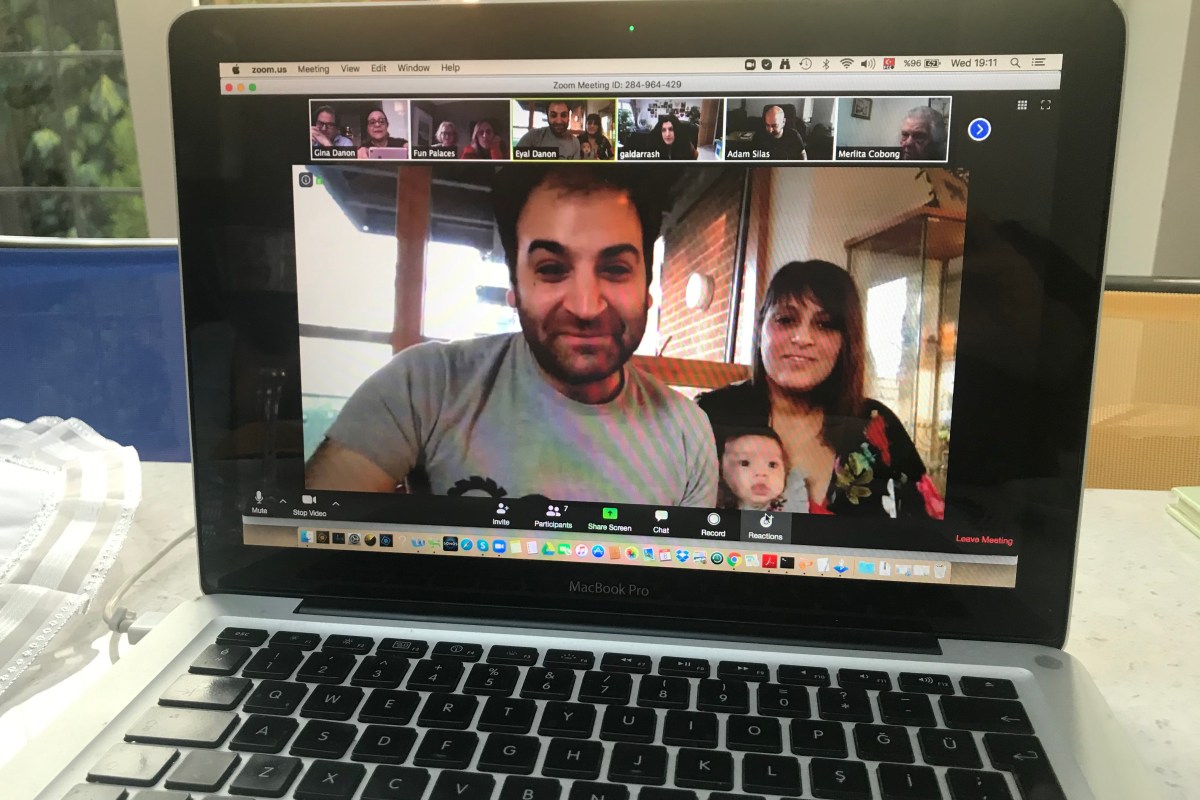
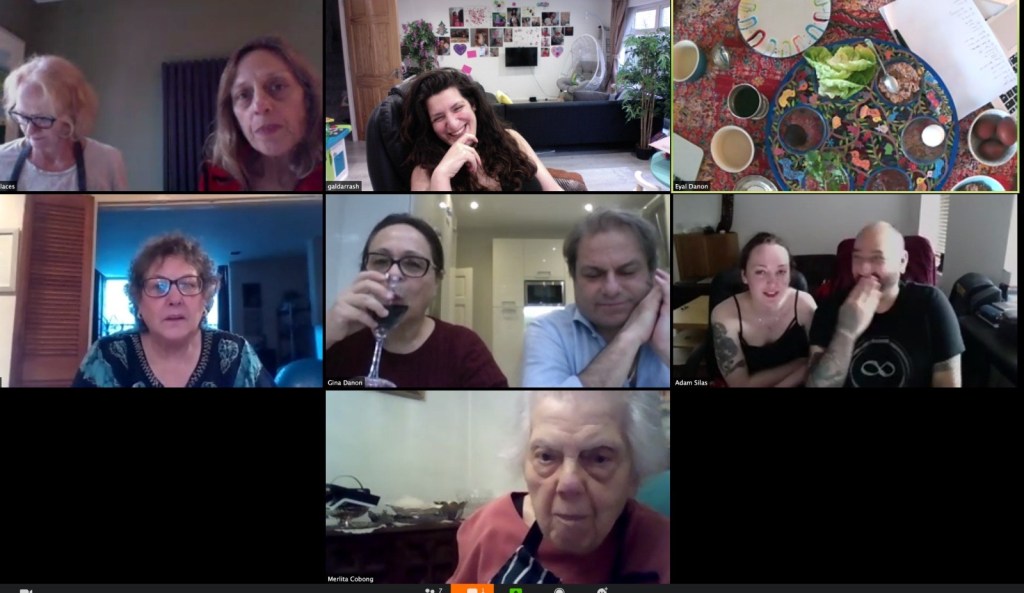
This year, like many other families, we took part in the Passover Seder digitally. I spent an hour setting up zoom (via phone) with mum’s carer, then my eldest nephew took control of her computer and sorted out some niggles. Then he took control of my cousin’s computer and did the same. Mum was, I think, quite excited at the prospect, our first on-line festival. She would be with us, not with us. Our bubbles would burst together.
My wife prepared our table with her usual flair and a great deal of generosity. My worn Haggadah (the Jewish text that sets out the order of the Passover Seder) with its blue velvet cover was ready. We didn’t have the ‘right’ wine, substituted it with non-alcoholic Martini Rosso. A box of matzah was placed on the table, along with everything we needed for the blessings; lettuce, boiled eggs, lemon juice, celery, parsley (sorry, no shank bone), a small pot of Charoset (or haroset or charoses), a sweet, dark-coloured paste made of fruits and nuts. My aunt still makes the best Charoset. The one I bought in the local kosher supermarket was too sweet for me. Our chicken was roasting, the veg prepped. Everything was ready.
At seven o’clock, my family’s faces started to appear on screen, popping up with smiles and waves. My niece and nephews and their partners zoomed from their homes in north London. My niece-in-law’s parents joined from Barnes. My cousin zoomed from Gants Hill, and mum and her brilliant carer came to us live from mum’s dining room in NW11. This wasn’t the entire family, that would have been too chaotic. Though we did exchange messages with the cousins during the evening, a sense of sadness alongside solidarity and love. Social distancing has been hard on everyone, those who live by themselves, the elderly, those who are grieving alone, those in care homes and their families and friends who are not allowed to visit. The digital age – to those who have it – has never been a more vital life-line. For some in hospital, whose only way of communicating with family is with the help of NHS staff and a device, Facetime may provide a final memory.
We gathered together and yet not together in our respective kitchens, dining rooms, living rooms. When my mum’s face appeared a cry went up. Hi Esther, Hi Es, Hi Mum, Hi Grandma! I held in my tears. She has macular degeneration and is registered blind. No amount of screen space would allow her to see us. Her hearing is challenged anyway, never more so than when we’re all trying to speak. But we took care and let her words emerge, though every syllable is now a meander and a struggle.
There are many sentences in the Haggadah that I don’t like or don’t agree with. There are also many different versions of the Haggadah. My nephew and his wife had planned ahead and sent us a link to a reform Judaism version, which is kinder and more thoughtful than the usual texts, including illustrations of daughters and not just sons. I noted one of the editorial group was named as Rabbi Neil Kraft, a much loved and respected Minister from Edgware and Hendon Reform Synagogue, who was due to retire. Rabbi Neil Kraft died of Coronavirus. Everything is connected.
Working our way through the blessings, we came to the ten plagues, accompanied by colour illustrations. As a plague is named, a drop of wine is poured into an old glass. Blood. Frogs. Vermin. A mixture of noxious beasts. Pestilence. Boils. Hail. Locusts. Darkness. Slaying of the first born. I added, Covid19. The glass is then wrapped in a cloth, taken outside and smashed. Be gone plagues. We do not want to drink you!
Only too aware of all households around the world, each with their own worries and concerns about the health of loved ones, jobs lost, work on hold, and how we’d approach an eventual easing in to a new normal, we waved goodbye. Faces disappeared one at a time, all of us so happy to have been together, to have raised glasses and hopes. Mum’s worry about when the egg must be eaten was satisfied, because she ate the egg when she chose to, not according to a text.
At the end of the Seder, there’s a saying, ‘Next Year in Jerusalem,’ which I interpret as next year we will celebrate Passover in Jerusalem or next year we will be living in Jerusalem. It has never been my intention to live anywhere but where I have lived for the past fifty-eight years.
As their faces dropped off the screen, faint farewells fading, I knew where I wanted to be next year. In north London with my mum.
Good morning. Stella couldn’t sleep so went and did something or other late last night, perhaps she wrote a blog. So I thought I would write one too.
She returned to bed at 3am. I woke at 6…mind keeps whirring…on the news late last night they said people’s moods had gone from shocked to angry. I was very angry yesterday and took it out on Twitter – on people who have just started ordering milk in bottles (worried about going out/low supplies in supermarkets, there is plenty!) when loads of us have been doing it (for environmental reasons) for years. Sorry Twitter.
I am glad I cleaned the Velux windows in my office yesterday, because rain drops look so much prettier on a clean surface! I will run today and see what the world looks like, the atmosphere, the energy, all very different now. We will rise from this, we will recover, but our lives and sensibilities will never be the same. At least mine won’t be. They have been bashed and knocked and that is not necessarily a bad thing.
New plays and books and music and dance will be created. The way we work, everything will probably be touched by what we are all experiencing. I have sorted out mum care in case we go into lockdown. We are blessed with a carer who adores mum and doesn’t want her to get sick. We have already talked about the what if…what if you die during this horrendous time and I won’t be able to have the house full of mourners for 7 nights. I want to carry our what I promised I would do for you mum, I want to honour you, mum. And mum turned to me, and paused because her vocal cords are heavily challenged, she pointed to me and said, you’re honouring me while I am alive.
Speaking on the phone is hard for mum as her ability to talk has diminished greatly. Skype isn’t an option because she can’t see. She has her big button radio (at 91 1/2 she has memorised every station and which button she needs to press) and her audible books, which I can work remotely. At least I can visit mum and ensure she has everything she needs. So many cannot visit their elders and relatives who are in care homes and unwell. That’s a gift for me right now in the middle of this global catastrophe. Hold on to the gifts we still have, there are plenty, the little gems that will pop up. Kindness. Sharing. Respect. Awareness of others’ needs. Gifts. Tell me about them. Have the conversations you wouldn’t normally have. Be afraid but be hopeful. Consider those who are alone. Do all those little jobs at home or in the garden if you have one, that you have put off. Walk. Start that exercise regime you’ve been putting off. And love (yeah, that).
If you have had or will have any unexpected gifts, and I don’t mean bars of chocolate dropped through the letter box (always welcome though…), well, you know what I mean. There are gifts in our lives every single day. We possibly haven’t seen them in the past because we have been caught up in shopping, working, rushing around, doing doing doing. Or maybe I haven’t seen them and the rest of you have. Now we have time. A little time. A different time. The time we are spending together and with the few we see is a very different time, a new experience. And it’s okay to be angry, upset, to cry, to howl, to be pissed off, because this was not in my picture and probably not in yours.
In time this picture will fade. The screen will offer us a blank page. It will be up to us to create a new picture. What will yours be?
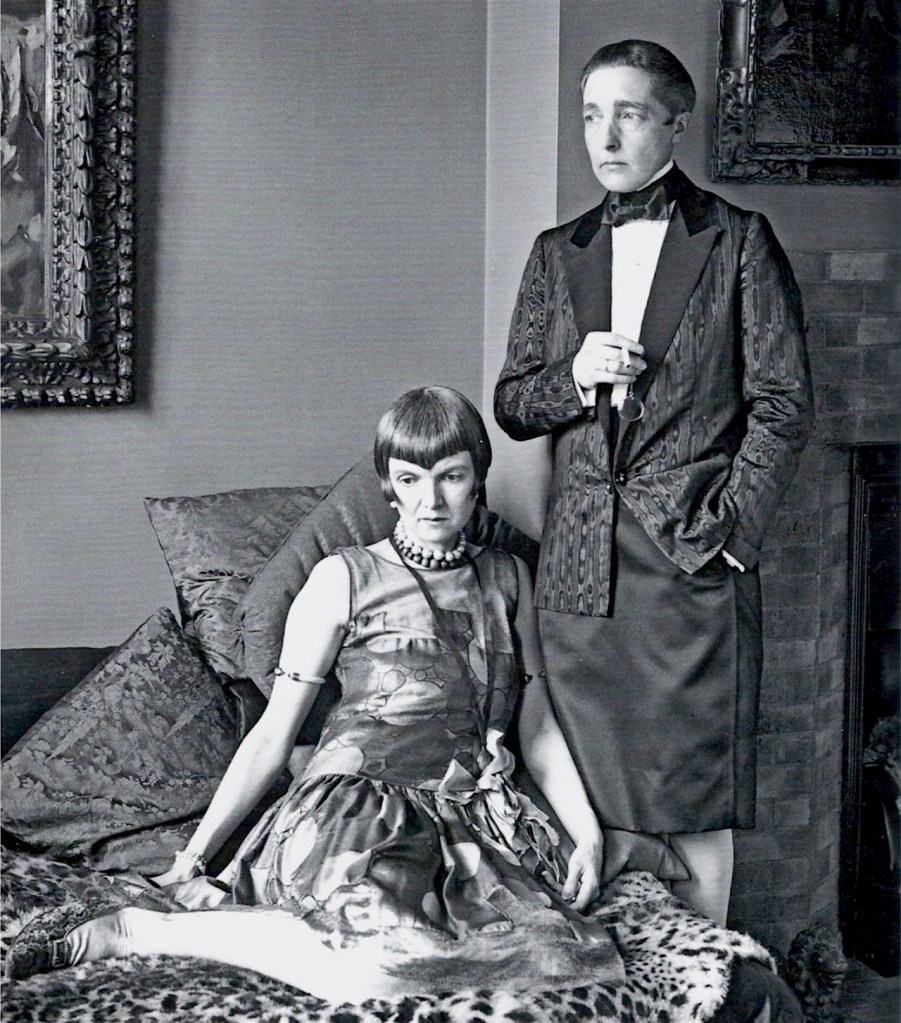
My play, The Trial of the Well of Loneliness, was first broadcast on BBC Radio 4 on Saturday 25th January 2020. If you want to listen again, use the link above.
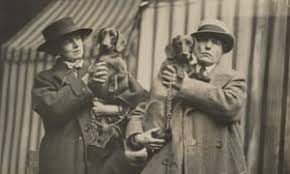
It took an immense amount of research and time to find the best way into the story. There is so much more to tell, at 57 minutes we had a lot to fit in. The National Archive provided me with a file of over 450 jpegs, all just labelled jpeg. I spent three days finding out what each file contained. Near the end of day three, I found the entire court transcript, all 16 pages of it. For those who have heard the play, the word horrible is mentioned many more times than I have included. Working my way through the trial documents was difficult, because this was someone else’s life, a real person’s life, I was entering and I had an enormous responsibility. I wanted to show John’s bravery, her tenacity, John and Una’s love and unity and the tremendous support they received from their all male legal team as well as the public. Given the prosecution, magistrate, and journalist whose review prompted the case knew the outcome they wanted, there were good people around and that was vital to show.
I must add that the final two speeches you hear in the play, are Una and John’s own words. Through research I found them, rather they found me. What a gift.
The director, Emma Harding was sharp with her comments and suggestions on my script. Actors always bring a new energy to a read through and recording and I was lucky I had actors who had carried out their own research. The cast were sensational, the play could not have been better served. I thank them all, and the technical crew for their suggestions and for making it into the final production we are all proud of.
At a time when LGBTQ+ hate crimes have gone up by 55% in the UK over the last five years, and many countries are still unsafe for the LGBTQ+ community, with the death penalty in existence in some places, the play is a reminder that we are still not safe, even in the UK.
When the trial took place in 1928, there was hope for these women and for their work to be shared. We must never give up hope, for ourselves and for others.
You can hear me talk about the play with Jane Garvey on Woman’s Hour.



 Shelley Silas - writing about writing and other stuff